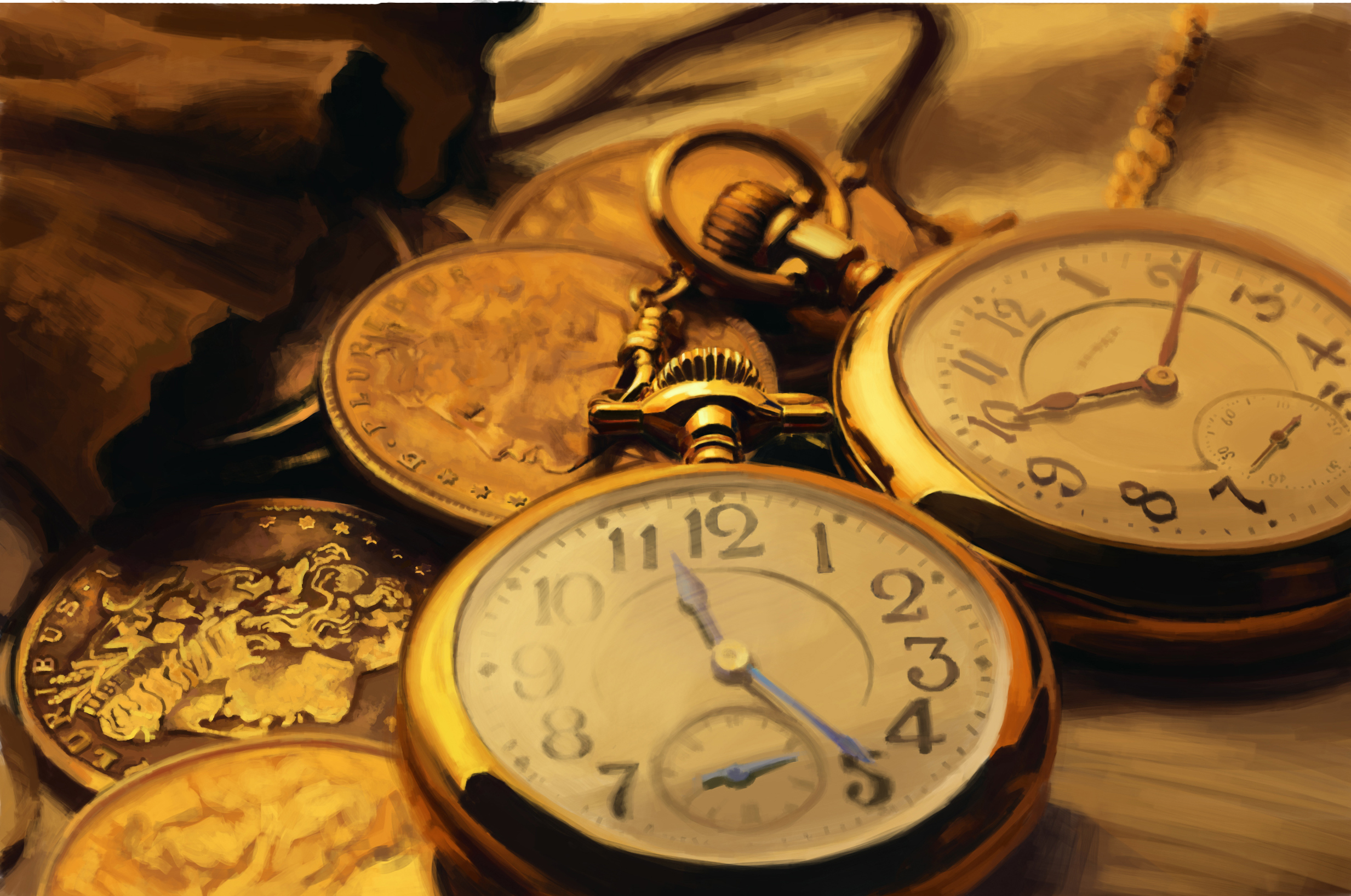


I have a lot of complex feelings about time that I often feel like getting across, but it never gets anywhere when I struggle to put it all into words. For that reason, I’m going to try at least for now to keep this as straightforward as possible, to the point where it almost sounds like a stream of consciousness. Ideally, if I were to read this back, it should sound kind of like I was just speaking my mind into a speech-to-text program for ten minutes. Which isn’t a bad idea actually, but I am in a library unfortunately so that idea has to go on the backburner for now. Anyways, this is as much me talking to myself as it is just me realizing my thoughts by projecting them into the void and sharing them with as few or as many people care to listen. Mass reach is not really the goal here.
I’ve been learning a bit of theoretical physics recently and let me tell you, some parts of it only get more surreal the more you try to understand it. I think one reason why quantum mechanics has somewhat of a reputation for being obtuse and nonsensical is because it kind of… is. So much of it sounds ridiculous upon explanation because we aren’t able to reconcile it with our existing understanding of physics. I mean – not to get off on a tangent – but the fact that something like the dual-slit experiment is real, empirically proven, and widely accepted rather than being straight out of some coke-binging ex-physicist’s mid-life crisis project on Wattpad is bizarre to me. To any standard observer, it would feel like the universe is “aware” of human consciousness and actively “tries” to hide its subatomic “inner workings” from us. And what may be the crazier thing is, I can’t really say for sure that’s not true.
Regardless, the nuances of quantum physics is something I should save for later. The point is, the concept of time is something that has entered the sphere of theoretical study increasingly in modern history. As we understand it currently, time is a theoretical fourth dimension of the fabric of the universe, or “spacetime”. If we get into the super theoretical stuff like String Theory, there may be more. Either way, as Einstein describes, spacetime is relative and not constant anywhere in the universe. Trying to understand what that means is like another Chinese knot situation – it might not be worth it at all. But all the spooky stuff about black holes you hear gives you somewhat of an idea. Given the infinite mass of a black hole, gravity near its singularity is so great that it “infinitely” warps spacetime as well. One aspect of that is space. The warping of space creates the illusion of gravitational pull. Infinite gravity therefore pulls matter towards it indefinitely, not allowing anything to escape. This effectively isolates the black hole singularity from the rest of the universe which does give rise to the Information Paradox, but again, a topic for another time.
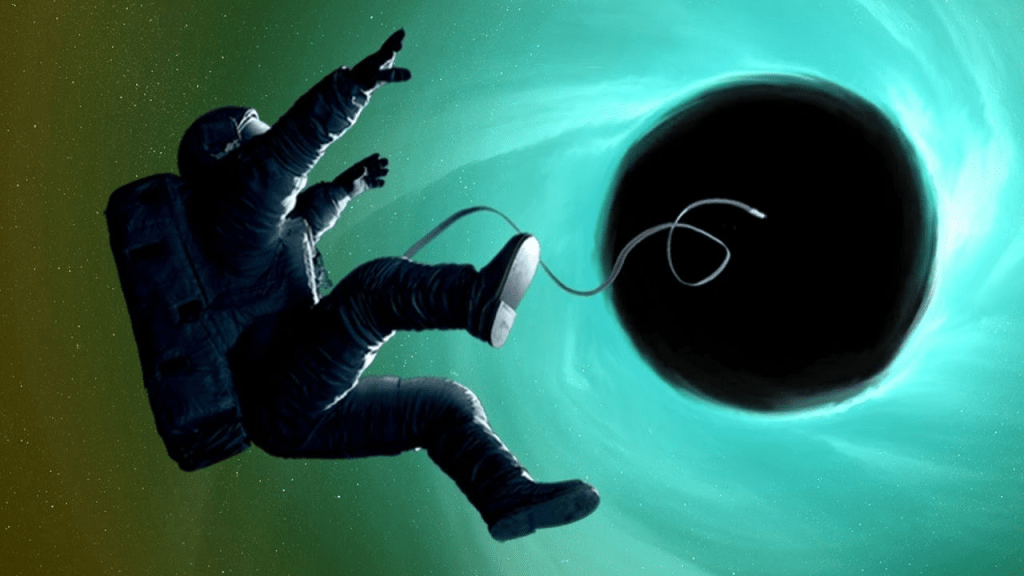
Perhaps more interestingly, black holes also infinitely warp time through a process we describe as time dilation. Also precipitated from Einsteinian Relativity, the idea is that for matter approaching a black hole singularity, time increasingly speeds up relative to the outside universe. This is what makes it so that to an outside observer, a person entering a black hole slows down at the event horizon – assuming they haven’t already been ripped apart at the molecular level – until they come to a complete stop, redshift, then disappear gradually. While the disappearance occurs because of the inability of light to escape from the black hole, the slowing down is a result of the opposite end of that time dilation: the speeding up of time for the person entering the black hole corresponds to outside observers seeing time “stop” for matter entering the black hole. The ultimate and kind of scary conclusion this leads to is that the person in the black hole (once again, assuming they have not died to any number of possible threats), would see the light from the outside universe enter the black hole and time speed up at an exponential rate until, near the singularity, time essentially breezes through trillions upon trillions of years, allowing the person to witness the death of all galaxies and stars, and soon after, the end of the universe. As the heat death occurs, the person would be alone in absolute darkness and maximum entropy, nothing but a distant memory of when spacetime had meaning.
That was dark. Literally too. It’s fine, there’s nothing to worry about. All of this is theoretical and, for all practical purposes, outside the realm of not only human knowledge, but especially your mundane day-to-day life. Why care about falling into a black hole when you have three assignments due tomorrow, you spend all your money on Starbucks, you work hours on end every week on stuff you hate and you have no control over your life?
The point is that, regardless of the scientific implications of time relativity, there is practical philosophical meaning that I relate it to as well. For as much as we twenty-first century physicalists want to interpret time as an objective measure, it isn’t. And even if you consider consciousness to be an emergent property of intelligent chemical life, there is no doubt that there are forces that shape the way we interpret time. I may be on a physics spree at the moment but the majority of my thoughts on time are in the realm of philosophy. So let’s separate the two ideas even though there is some important interplay between the two we might touch on: scientific time and conscious time.
Conscious time is entirely separate to the scientific studies and observations we have of scientific time. It’s essentially just how we experience and think of time. The reason why I draw a hard distinction here is because scientific and empirical measures may posit all sorts of things about the flow of time, relativity and so forth, but it has nothing to do with how we experience things. Even under the conditions we experience in our daily lives this is true. Can you truly say that the ten minutes you spent doing the dishes felt exactly the same as ten minutes with friends?
This revelation by itself is not profound. This refers to a concept known as “psychological time” and is widely studied in the context of questions about why we experience time at the rate we do. However, what is not so trivial is why we don’t philosophically hold this concept with more import. The point behind conscious time is to propose a revolution in the way we naturally and fundamentally think about time and do our internal conscious experiences justice by elevating them to the level of objectivity.
Let me boil it down to this. The flow of time is, for all purposes relating to our internal awareness, relative to our experiences. A month during which you are swamped with obligations, events, and milestones feels much longer than one in which you were stuck indoors lying in bed until 2 PM every day because someone decided to eat a bat. This strongly suggests that our experience with time is dictated not by some attunement we have with the fabric of spacetime, but by our brain activity. We don’t experience “seconds” or “minutes” or “years” in any meaningful way; rather, we internally and instinctively think about periods of time more as sequences of mind-stimulating events.
This is part of a broader discussion on the objectivity – or lack thereof – of reality. I might dive into specifics and give a more detailed take later on but I’ll synthesize my thoughts for now. Basically, everything we know about reality is based on our internal perceptions: everything we see, smell, hear, taste, feel, and, ostensibly, the way we experience time. There’s a profound conclusion to draw from this that I think most people don’t consider: if our personal “qualia” have formed every possible aspect of what we know about even the most fundamental aspects of the universe, is there such thing as an objective reality to begin with, at least in any sense that matters to us? The images we see of the universe are only possible because of the way our brain processes the visible range of the electromagnetic spectrum interacting with the retinas. Every little sound we hear is an experience our brain forms in trying to interpret vibrations in the air. Smells are translations of molecules interacting with receptors in the nose. When we start to break it down, we start to realize that every aspect of the reality we know is an internal experience: we create it in our own minds.

This is not to say that there is no objective way to measure the universe. We can measure the presence or absence of matter or energy and the interactions of the most fundamental universal forces. Such measurements are indisputable. While they may rely on man-made units and methods of measure, they ultimately do describe universal truths. And yet, there’s still a problem: no one cares about objective measure. I’m not joking; if I were to divorce you from your qualia then telepathically tell you that we live on a spherical structure with a mass of 6 x 1024 composed of various metallic elements, abundant levels of nitrogen, oxygen, and carbon, vast seas of dihydrogen monoxide that reflect light at a frequency of between 370 nm and 500 nm, and similarly massive solid structures that reflect light at up to a frequency of 570 nm, you’d understand nothing. And you’d probably suggest I get forcefully euthanized. But I’m not bashing you, not even a theoretical physicist would be able to get anything from my description without internal qualia because the problem is measurements mean nothing at all to us without a frame of reference that we obtain through our senses. So if reality doesn’t meaningfully exist outside the internal perceptions we have, it must follow that the only reality is an internal experience.
Does time matter then, if it’s a part of a “reality” that isn’t even real to us? Sure, maybe, like with other units of measure, we need to have a standardized way to keep track of things. Standardizing allows us to communicate easily because everyone knows what is being referenced at any point in time. But the word “knows” is key here: just because you might know that I took, say, ten hours to write this article doesn’t intrinsically mean anything to you. Instead, you relate the idea of ten hours to other experiences you’ve had. Maybe you think “oh, that’s how much sleep I get in a week” or “hey that’s how much I procrastinated today” and only then do you start to internalize the meaning associated with the timeframe I’m trying to convey. Even if you don’t consciously go through that thought process, you subconsciously must. Because, as we’ve established, reality is internal so the only way to truly understand and internalize something is to relate to past knowledge. For the rest of this article and when I discuss this topic, I will typically tend to use time-related terms in this newly-established subjective sense. If I say “you’ve been reading this for a long time”, I’ll probably mean “your experience reading this has felt like a long time according to your internal reality”.
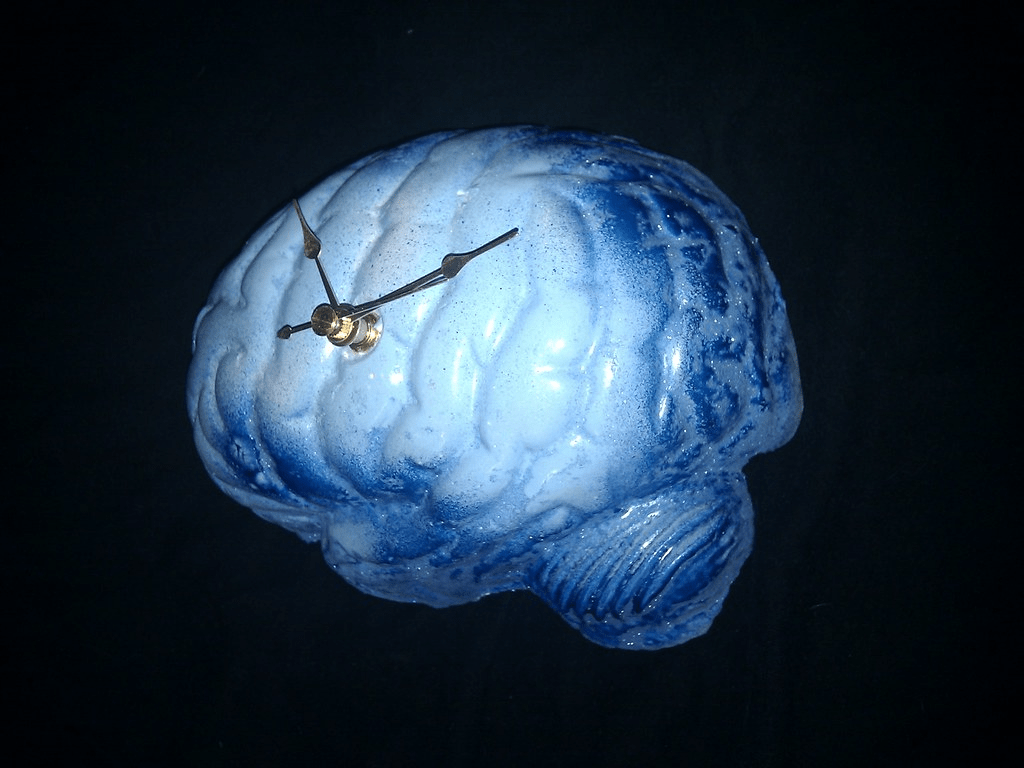
So if time is subjective, what exactly does that mean? How does time flow? You little rascal, this was supposed to be introductory and you’re making me explain myself even after I’ve hit 2000 words?
It can’t be understated just how vast and theoretically complex this part could get and there’s not a chance I’ll be able to even think every thought I want to think, let alone convey all the thoughts I’ve already had. Regardless, I would say the actual, meaningful flow of time depends on several factors, the foremost of which I would classify as being the “relative time of perception”. This refers to the time at which you try to perceive a given time period. Let’s say you’re going to have an exam next Tuesday (couldn’t be me). If you’re thinking about how “long” the exam will be right now, you will feel much differently than if you try to remember the exam six months down the line. Almost undoubtedly – unless there’s something super unexpected that happens at the exam – it’ll feel like it’ll be a lot longer right now than it’ll feel like it was in the future after it’s over. And during the exam itself, it might even feel endless. This is what I mean by relative time of perception; your perception of an event or period will be dramatically warped depending on when you’re perceiving that event or period.
Besides that, I’d say the other major factor in determining the flow of time during a given time period is the activity and function of the mind. This should be intuitive given our established view of internal reality. If reality and time are internal, they must ostensibly be shaped by the mind as the driver of the internal world. A period of time you spend without much mental stimulation is going to be, in retrospect, short. On the other hand, periods of high stimulation – either positive or negative – are much longer. If this sounds pseudoscientific, we can take the physicalist approach and accept that consciousness is merely an emergent property of chemical microbiological processes in the brain. In other words, the fact that we have a conscious experience including pain, pleasure, intelligence, contemplation, and the impulse to write a two-thousand word post on a dead blog that no one will read, stems from the chemical workings of brain cells after millions of years of evolution. Even in this case, it stands to reason that a consciousness that has lots of experiences has more active microbiological processes that guide its thoughts and feelings than one that is sedentary. This variability in brain activity is then what determines the flow of time from this perspective.
I feel like I’ve gotten a lot of my thoughts out so it may be a good point now to end this piece. I don’t know if this will be particularly coherent looking back, but remember, the point was to maintain a hint of “stream of consciousness” to overcome my own procrastination. This stuff is important to me, though. I find myself thinking a lot about it these days. I’m not normally a strong constructivist but thinking through this lens helps make a lot of at least what I intuitively feel make sense. Using this perspective, there are prescriptive assertions about how best to live life, too, but that may be best saved for another time. I have a lot more in the tank for content and this was never supposed to be more than an introduction anyways. If I want you to take away one thing from this, it’s to just reflect on what I’ve said about reality and time as subjective and internal experiences for all practical purposes.
Beyond that, stop having an existential crisis and get back to work. But also, come back and read the next one.


You’ve fallen off the deep end.
LikeLike
Says the man who just recently started watching more idol anime
LikeLike
Man has returned after bare time off eh lol.
Exam stress getting to the big man 😂
LikeLiked by 1 person
you’re not wrong LMAO
That’s a few hours I could’ve been studying right there 👀
LikeLike